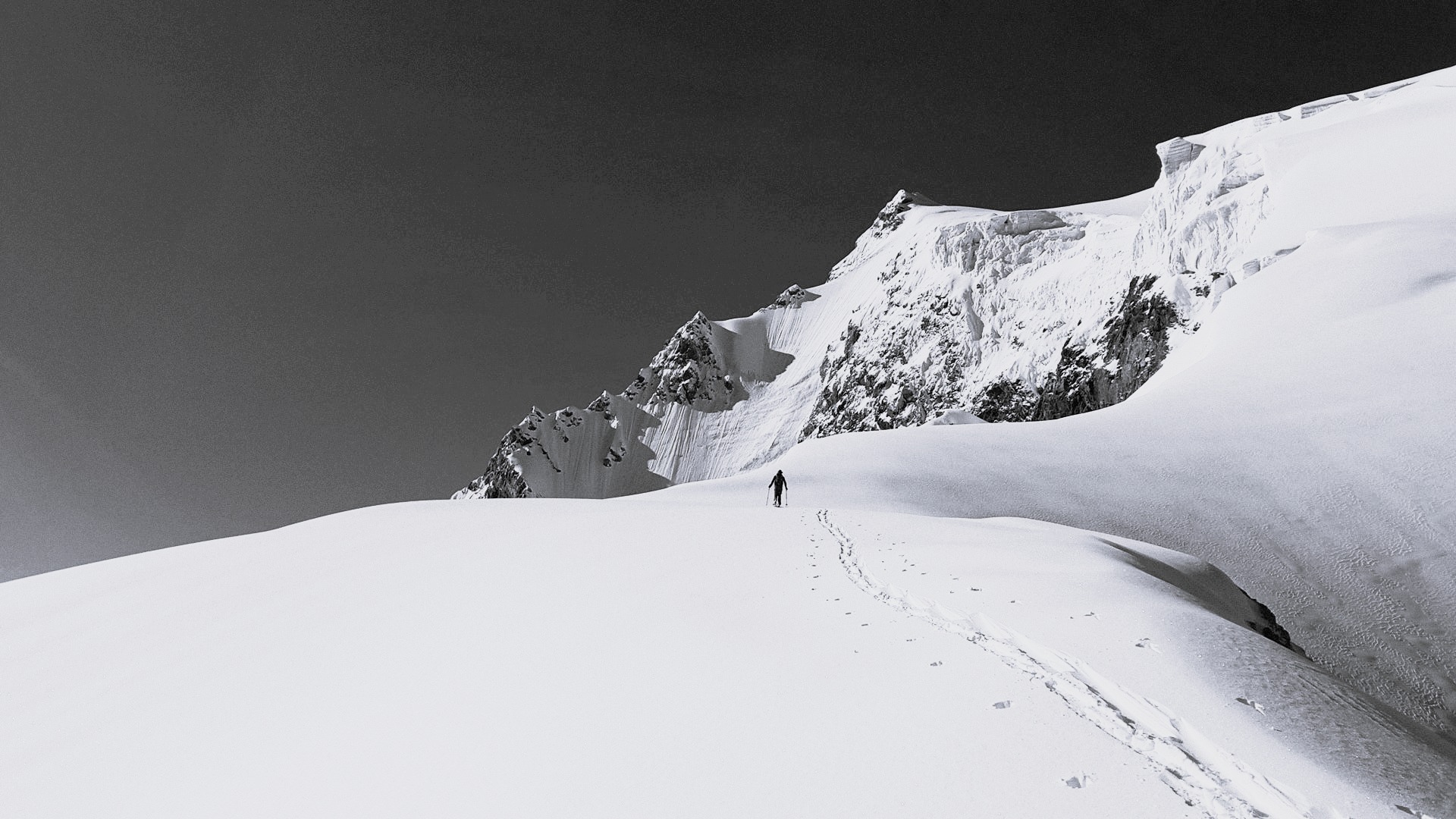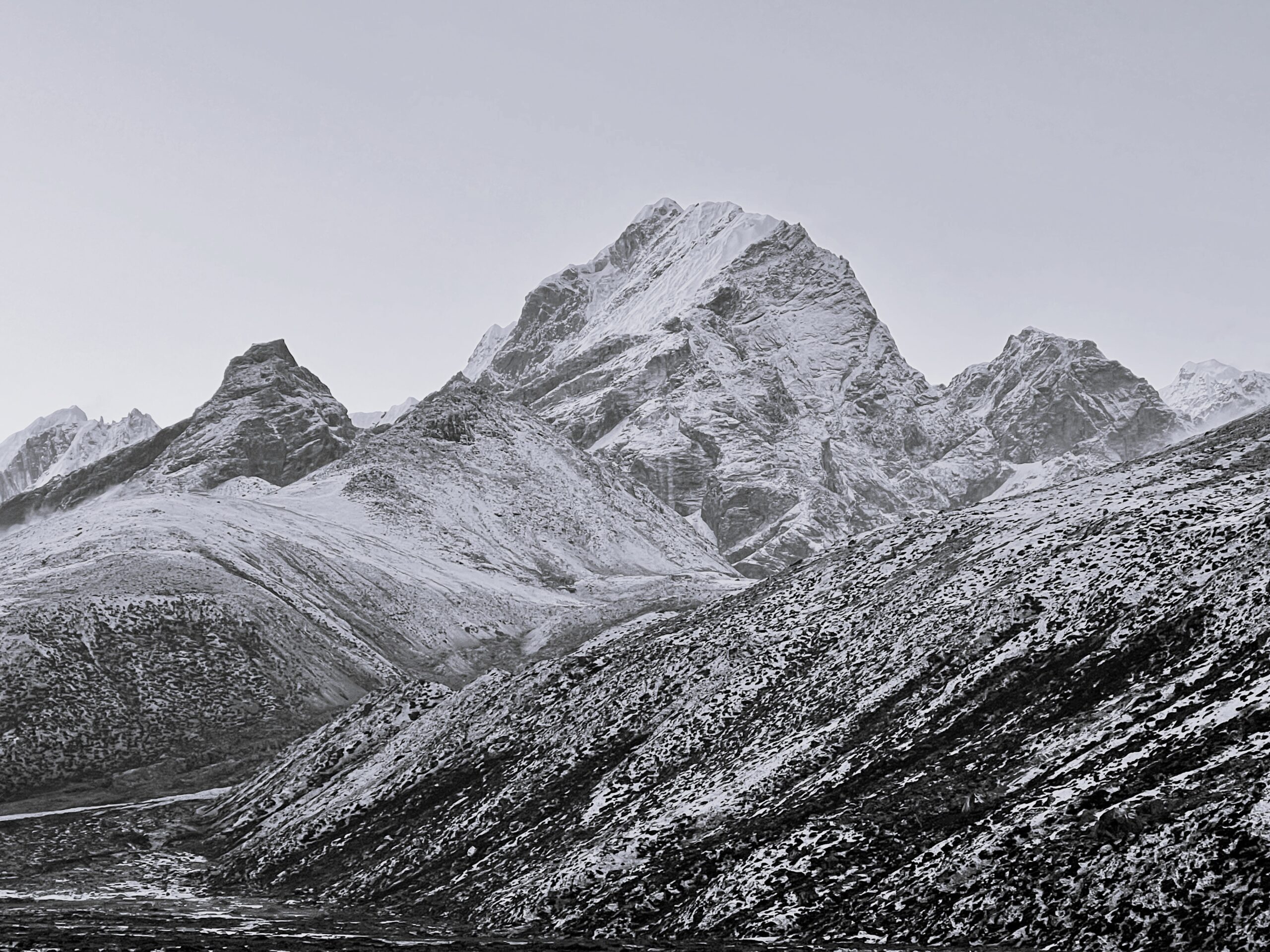
“It is not the mountain we conquer, but ourselves”
– Sir Edmund Hillary
By design, I am swanning around on a small tropical island off Lombok, Indonesia. Otherwise known as My Happy Place, Gili Air. It’s the kind of place where the days stretch leisurely as the light softens, where the humid air feels warm and heavy on your skin, and life never really asks anything too much of you. Yet my body still feels like it belongs somewhere else entirely, like it hasn’t quite caught up to the fact that it is no longer moving through thin dry air, because just a week ago I was high in the Khumbu Valley in Nepal, walking slowly, deliberately, toward a mountain I had no real business climbing except for the fact that I had decided I would.
It was a strange decision in the beginning, one of those things you decide you’re going to commit to, and then immediately hear the absurdity of it echo back at you when you say it aloud to others, I’m going to climb a six-thousand-metre peak in Nepal, Lobuche East. It’s the kind of thing that sounds all clean and impressive in a sentence, but becomes something altogether different once you are inside it, once you are weeks deep into a landscape that strips away any illusion that you are in control of deciding anything at all, where Mother Nature is boss and ruler, and you are reduced to an insignificant speck, suddenly and viscerally understanding the cosmic insignificance of any constructed meaning you’d formerly created in your own life.
Lobuche East is called a “trekking peak,” which sounds almost friendly, like something you could wander up with a good attitude and a packet of trail mix, but it is a deeply misleading little phrase. Because by the time you have followed the long Everest trail out of Lukla and through Namche Bazaar and Tengboche and Periche on to Lobuche village, by the time you have spent days upon days at ever-increasing altitude, crossing rough trails and glacial moraine and snow-covered sections and river crossings, by the time you have reached Everest Base Camp already carrying the fatigue of the Lobuche approach in your legs and lungs, the idea of the mountain has quietly become something else entirely.
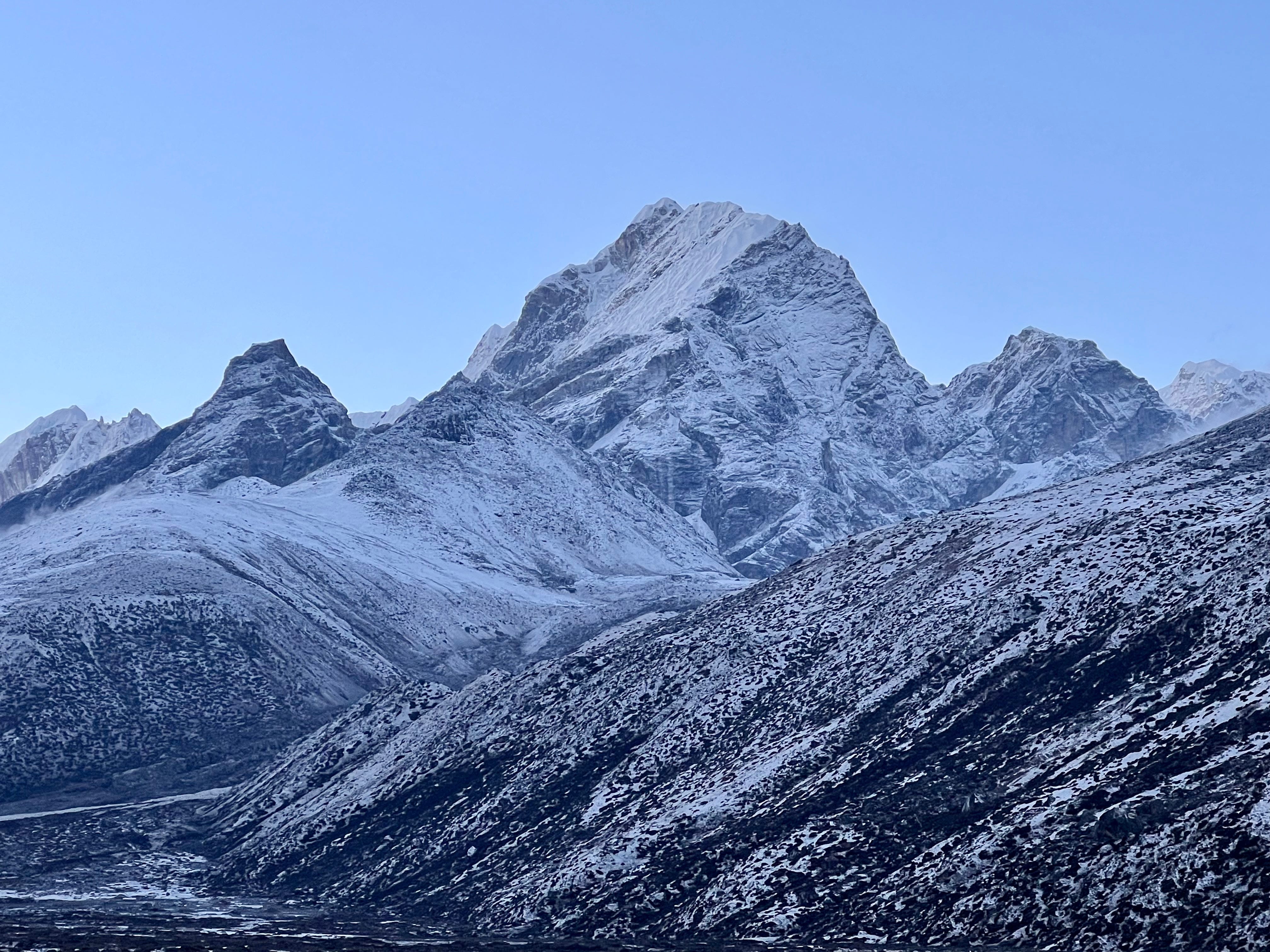
There is no version of climbing a six-thousand-metre peak where you get to rush, no version where you get to multitask or scatter your attention or override your body and hope for the best, because above five thousand metres the body stops accepting your BS, the oxygen thinning to something like half of what you are used to at sea level, and even simple things become strange little negotiations, walking, sleeping, eating, lifting your boots, clipping into a rope, thinking clearly enough not to make a stupid mistake because you are tired or cold or scared or moving too fast.
The Khumbu Valley is like stepping directly back into the Middle Ages. It does not care about your reasons for being there, and it does not respond to urgency or ambition or the way we have learned to move through our Western lives back home, fast and fragmented and slightly ahead of ourselves at all times. The terrain itself refuses that pace, it shifts constantly under your feet, rock giving way to mud, mud to snow, snow to something frozen and unpredictable, and you are adjusting every few seconds whether you realise it or not, your body learning to slow down and read what is in front of you in a way that feels almost primal, because if you misstep, if you rush, if you assume stability where there is none, you are corrected immediately, sometimes gently, sometimes with a harsh slap-down-from-Mother-Nature herself.
And always, threaded through everything, the same quiet instruction from the calm, and capable Sherpa guides, spoken without urgency and without explanation, as though it is the most obvious truth in the world…
Bistarai, bistarai (slowly, slowly)
It took me a few days to understand that this was not a suggestion, not a piece of cultural colour or a kind way of telling foreigners to take it easy, it was a rule, a law of nature, the only way to work with this environment, because the altitude does not negotiate, the body does not respond well to being forced at that height, and the more I tried to operate in the way I was used to, pushing a little harder when I felt good, trying to gain ground, trying to get somewhere faster, the more clearly my body pushed back, the high altitude headaches arriving that would sit heavy and insistent behind my eyes after I finally reached the teahouse or camp each evening, a kind of body-warning that felt serious and cellular, not fixed by sleep, not even really eased by rest.
So I began, not in any grand philosophical way but simply because it worked, to actually S L O W T H E F U C K D O W N, to match my pace to something outside of my own usual speedy habits, to listen in a way that I realised I hadn’t been listening for a very long time. The pace of Mother Nature herself. Slow. Conscious. Attuned.
By the time we reached Lobuche village and began practicing our mountaineering skills with ropes and crampons at well over five thousand metres, setting lines into fresh snow, clipping in and out, learning to find some kind of rhythm through gear that had felt manageable at sea level and now felt heavy, slightly foreign, almost resistant, I became acutely aware of just how much of a beginner I was in this context. There was a moment, standing there with my alpine harness on, ascender in hand, breath far shorter than I wanted it to be, where the thought came through clean and unmistakable, what the fuck are you doing here, you have no business being up here, you are well out of your league, Taylor. It was just honest, a quiet, grounded acknowledgement of the gap between where I was and where I was trying to go, surrounded as I was by the incredible Sherpa for whom this native terrain was familiar, whose bodies moved through it without needing to adapt or think.
And yet, running alongside that self-doubt, just as steady, was something else entirely, a quiet knowing, a kind of gratitude for the preparation I had almost taken for granted, for every hour I had spent back in the sweltering heat of a Perth summer, in my backyard rigging up makeshift fixed lines, fumbling and learning to clip in and out safely with my rock-climbing mate Kiralee, for every minute out at the Quarry in the Perth Hills, stepping backwards off a cliff face on a rope in 40 degree heat, heart in my throat, learning knots, learning to set and trust the rigging, learning how to move my body in relation to something vertical when everything in you wants to resist it. Even though it had overwhelmed me at the time, and even though it never felt remotely like mastery, never felt particularly polished or complete, it had been enough, and up there at 5,000m plus, enough, done properly, is exactly what you need to just make a start. To have a crack.
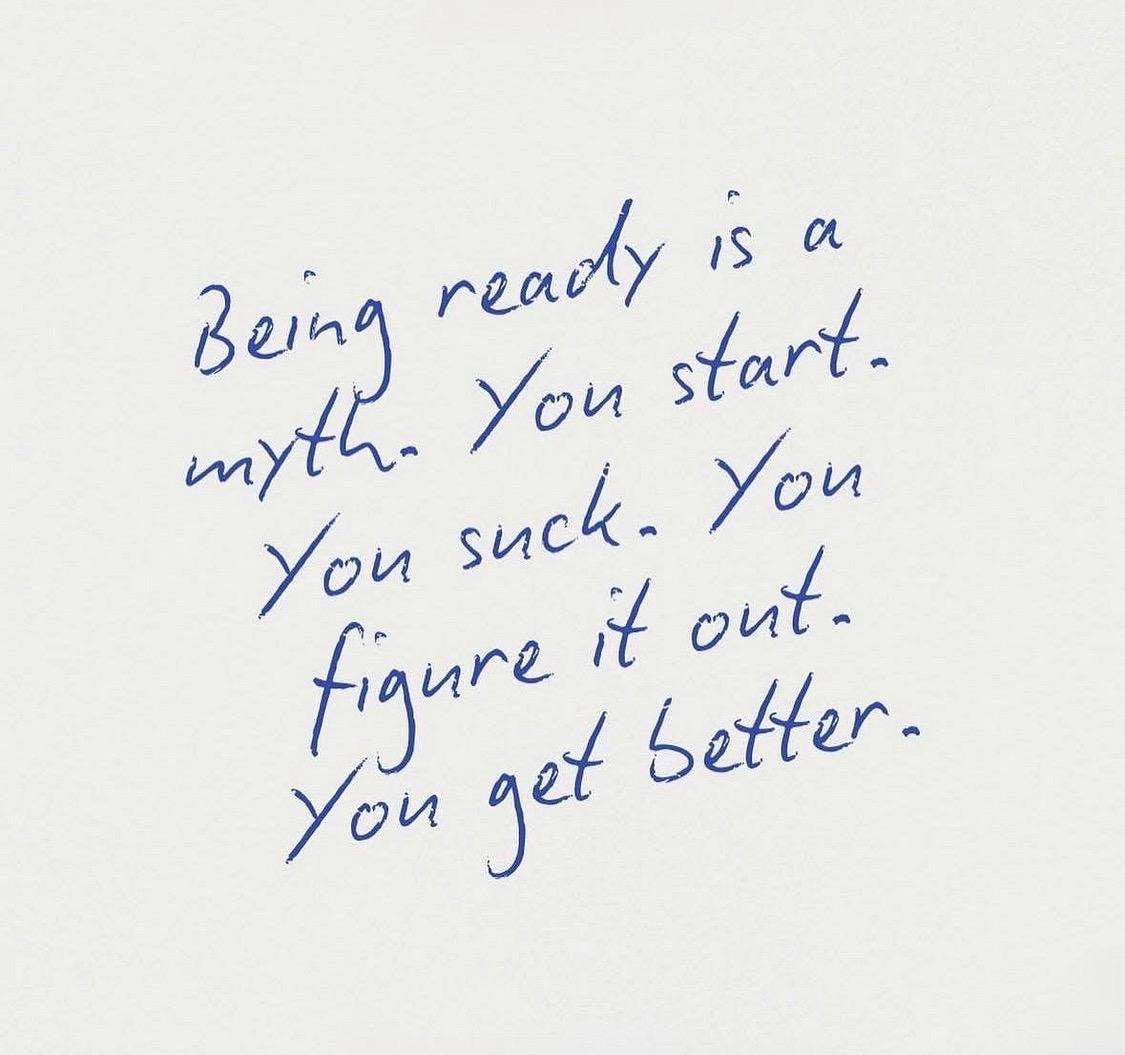
This is where the rubber hits the road – in that uncomfortable, humbling space of being a total newbie – a total fucking beginner. In completely over your head. Where nothing is automatic and nothing can be faked, where every movement asks a new question of you. This, my friend, is entry-level mountaineering, which all sounds deceptively manageable when you’re reading about it at home, but once you are finally there inside it you start to realise what it actually demands. Yes, it asks for trekking endurance, long days, strong legs, lungs that can cope, but then it quietly, insistently asks for something more, some level of competence in a skillset that is not easily learned without consequence. I remember thinking more than once, how the hell are you meant to properly learn any of this in a ‘safe’ environment, because now here you are, in it, with crampons and ice axes and harnesses and fixed ropes, moving across glacier and rock and steep snow, clipping in and out, managing systems that matter, and it requires a kind of calm, steady, unflinching focus that – even as a beginner – feels both advanced and utterly essential – just to keep you the fuck alive.
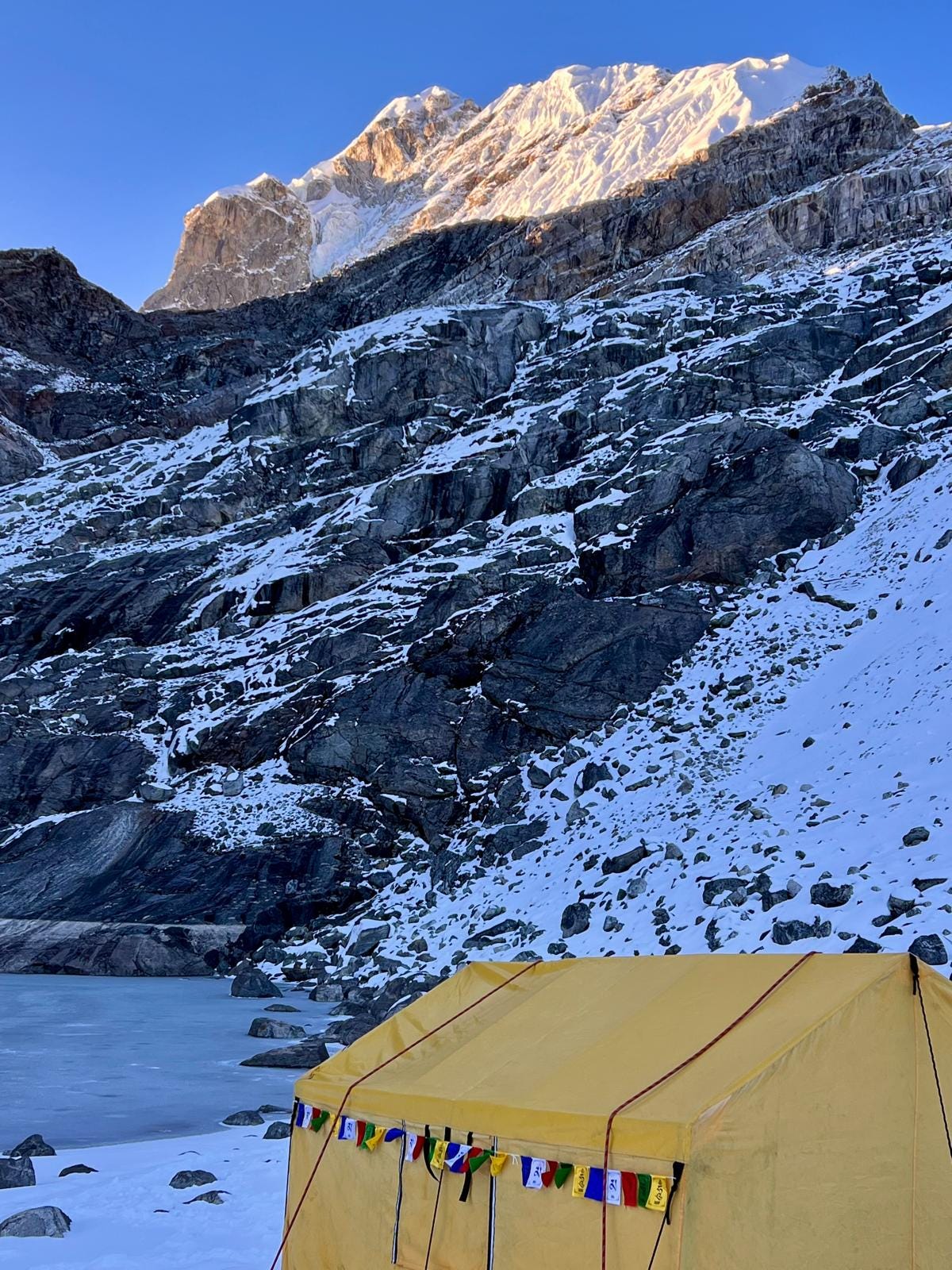
The climb from Lobuche base camp up to Lobuche high camp the day before the summit was where it began to really sharpen, where the edges of what we were doing became clearer. We moved in a full whiteout, snow falling thick enough to erase depth and distance, climbing steep, narrow ridgelines of frozen rock, where your hands are as important as your feet, pulling yourself upward on flimsy-feeling-fixed-lines, the exposure felt rather than seen, and I remember thinking more than once that it was a strange kind of mercy this white out – to not be able to see how far down it dropped, because the body can hold a lot more when the mind is not given too much information.
I asked Ang Dorje Sherpa as we sipped our soup the night before the summit what his one piece of advice for me would be. He looked at me, calm as anything, this man who has stood on the top of Everest more times than I can properly comprehend (24 to be exact), and he said, slow everything down, even when you are checking your kit tonight, even when your alarm goes off tomorrow at one in the morning… just go slowly, because people make mistakes when they go fast.
By then I had learned enough to know he was not giving me a nice little mountain proverb.
He was giving me the key.
The summit day itself is only one part of the whole ordeal, but it is the part that distils everything. We left high camp at 2:17am, after a (half) night of poor sleep and wind that roared and had me convinced-in-my-half-sleep that my tent was going to lift off the mountain and deliver me to Tibet like some kind of mountaineering Mary Poppins.
2:17am. The exactness of that time sitting in my memory because everything about the morning felt precise, deliberate, slowed down in a way that was almost ceremonial, the layering of clothes, the checking of gear, the quiet eating of porridge in the cold fluorescently lit dining tent, and when we stepped out under a sky that had cleared overnight (thank fuck), the stars were sharp and indifferent above us.
I felt that same mix of fear and readiness that I had known before in other parts of my life, in surfboat racing, standing on the start line staring at six-foot plus sets rolling in and pounding on the shore break, where the starter’s gun is about to go and your body is already flooded with adrenaline, in childbirth where the intensity of what is coming is so total that there is no space for anything else at all.
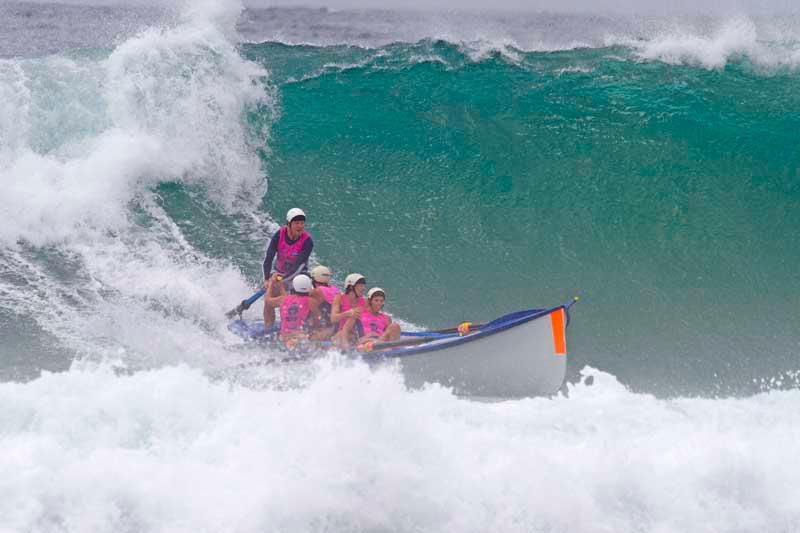
It is always the same, I realised later, that edge, that place just before you begin, where fear is loudest because nothing has started yet, because everything is still potential, and the only way through it has always been the same too, which is to begin, to take the first stroke, the first step, to give the body something to do, because once you are moving, once you are inside the action itself, the fear has less room to expand.
So I kept my eyes down; we moved first through rock slabs and snow in the dark, the beam of my Petzl headlamp shrinking the entire world down to only the next patch of ground. This kept my world neat and small, my headlamp illuminating only what was necessary, the next step, the next placement of my boot, the texture and crunch of fresh snow and ancient rock underfoot, and for the first hour my body was loud, adrenaline too high, breath too short, every nerve too alert, and then, gradually, it started to settle, as though it had decided that this was happening and there was no use resisting it, and I slipped into that narrow, focused state that I recognised from other parts of my life, the one where everything extraneous falls away and you are left only with what is required.
I did not look up properly for a long time because looking up meant understanding where I was, and understanding where I was felt like too much information.
So I gave myself one job. Narrow my locus of control.
Control the breath, I told myself, and just choose the next safe step, and I repeated it as a mantra.
The next breath. The next safe step.
That was it.
As we climbed higher, the terrain sharpened, becoming more technical, more exposed, more exacting in a way that demanded even more of your already full attention, and even in the darkness, under a bright, moonlit sky scattered with a universe of stars, you could feel it, the shift underfoot, the aggressive rocky ridges, the icy sections, the fixed lines appearing where the mountain required them, the constant need to stop, change safety lines, use the ascender, and trust the systems I had practised back in Perth, not abstractly now, but completely, because up here there was no version of half-trusting anything.
Around 4:30am the light began to shift, almost imperceptibly at first, the black of the sky loosening into that surreal Himalayan pre-dawn blue-purple, deep and luminous in a way that doesn’t quite feel real. We stopped briefly, sitting on our packs to keep out of the snow, drinking warm water we had insulated so it wouldn’t freeze, and for the first time I allowed myself to lift my gaze fully, to take in where we actually were rather than just the next step in front of me. And when I finally looked up properly, the world arrived all at once, enormous and indifferent and almost neon in that slow-building light, giant peaks in every direction, six-thousanders, seven, eight thousanders, the vast Khumbu Glacier stretched out below, the entire valley opening beneath us in a way that made beauty and terror feel almost indistinguishable.
It’s difficult to describe that moment without it sounding exaggerated, but it was overwhelming in a way that was both beautiful and deeply confronting, because the mountains didn’t reveal themselves gradually, they were simply there, all at once, everywhere, massive and silent and entirely indifferent to us, peaks upon peaks rising in every direction, the entire Khumbu valley opening in a scale that your mind can’t quite process, and I felt it all at once, an awe that bordered on disbelief and, right alongside it, a sharp gulp of awareness of how small we were within it, how far we had already come and how much terrain still remained ahead.
I could see the three tiny headlamps of the party ahead of us, the NZ team we had met at the Lobuchue high camp the night before, tracing the line we were still to climb, and the sight of them made the mountain suddenly legible, the steepness and exposure no longer abstract but visible, steepening into snow, ice, rock and consequence, into something that would demand more, and I felt the edge of overwhelm begin to press in, that familiar pull to look too far ahead and try to take in the whole of what remained, before I dragged myself back, deliberately, almost forcefully, to the only thing still within my control.
That is when the mental work became as physical as the climbing.
The next breath.
The next step.
Nothing else.
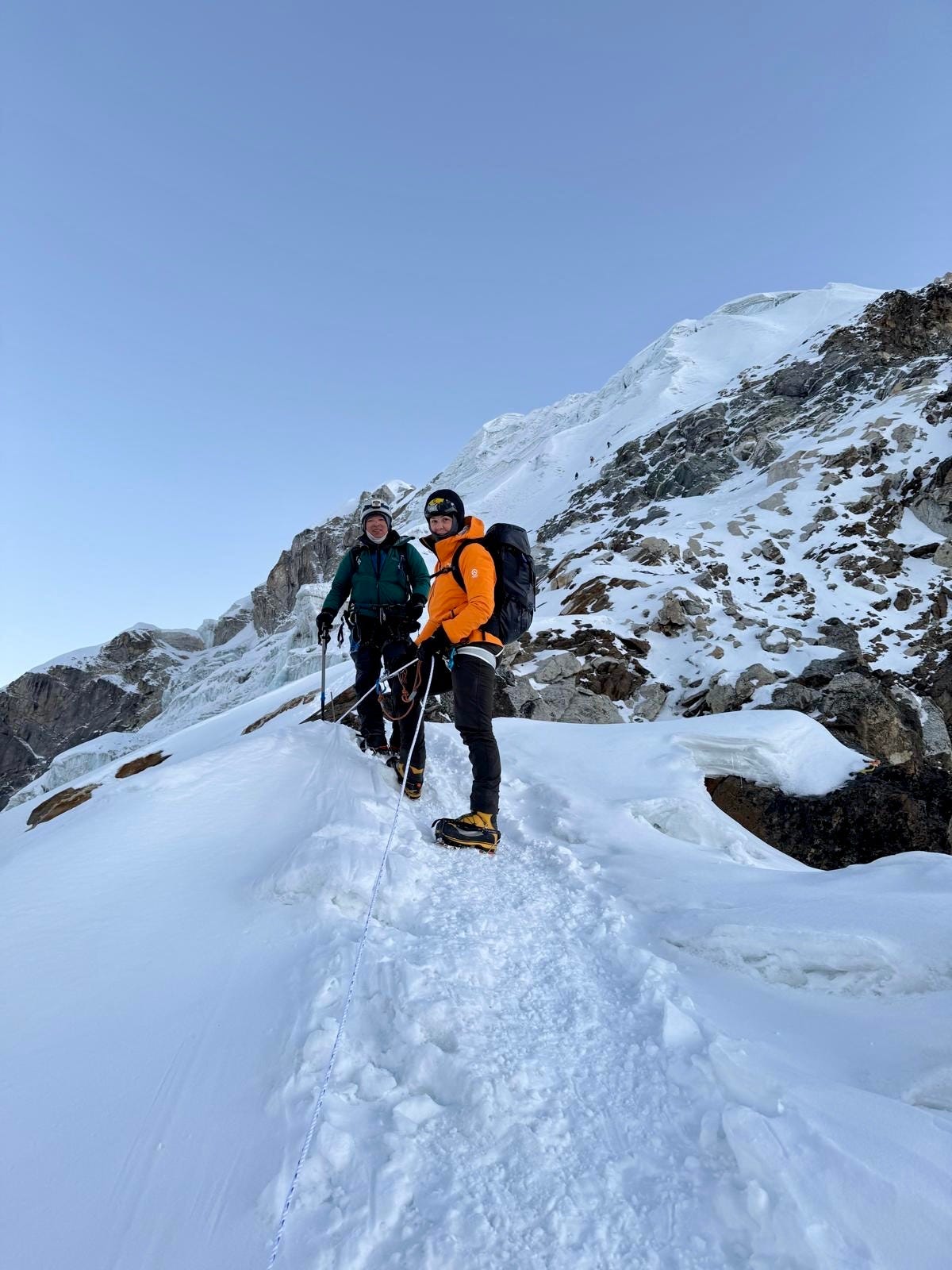
The final hours of the ascent, the final section toward the summit ridge, were some of the hardest things I have done physically, because they were so prolonged and sustained in their suffering… every single step requiring reserves of effort that felt dizzy and disproportionate, lifting a leg deep from the snow that wanted to stay still, driving it upward against gravity and fatigue and lack of oxygen, and there were moments, long moments, where I found myself bent over, hands on my thighs, taking four, five, six gasping breaths of thinning air, just to find enough fortitude deep within me to take the next step, waiting to see if another step might appear from somewhere else unknown inside me. And it was in those moments that the question I had carried quietly for nearly a year surfaced most clearly, can I even do this, and where the fuck is the next step going to come from, not in a metaphorical sense but in a literal, immediate way.
It is a bleak and confronting place to be, to be in the battlefield and to realise that you are not certain you have what is required and to continue on anyway, and the only way I could do it was to refuse to engage with anything beyond the step I was on, to shut down any thought that moved ahead into the distance or backwards into doubt, to return, again and again, to the same small set of mental instructions, the mantras that had carried me to that point.
Control the breath.
Choose the next safe step.
Slow it down.
The most frightening thoughts were never dramatic. They were small, sly things that crept in when I looked too far ahead or let myself imagine the drop or wondered where the next step was going to come from.
There was a moment on the narrow ridge on the very top of the mountain, no more than a metre wide, where we had to climb over a crevasse, and there was a second where my brain panicked (of course) and went, ‘well how the fuck does one climb over a fucking crevasse’, which is not a thought you particularly want to be having at 6,100 metres, clipped into a fixed line on a narrow snowy ridge with a very long way down on either side. I felt the fear rise and take hold in that instant, and I knew instinctively not to look down into the eternal depth of that crevasse, not to feed it with more information, and instead I snapped back, quickly, grasping almost aggressively, to the same place I had been returning to all morning, breath, step, breath, step, because that was the only thing that had worked.
Do not look down.
Breathe.
Step. Next safe step.
Then just before the summit, on that same ridiculously narrow ridge, we met the now-descending NZ team of three, all six of us clipped into a single fixed line, half of us going one way, half of us going the other, negotiating space where there was almost none, and for a moment I felt a surge of fear frustration, a flash of ‘what the fuck, why are they here, why right now’, and then just as quickly it passed, because this is what it is, there is no perfect timing, no controlled environment, only the need to adapt, to stay calm, to clip in, to clip out, to clip back in, to trust the systems and the climbers around you. Shut the fuck up and keep moving.
And so, we moved again, pulling more hard-won steps from somewhere deep, and suddenly, almost without warning, there was no more up.
We arrived at the summit at 7:14am, and what struck me most was not a sense of triumph but a kind of disorientation, because I hadn’t allowed myself to look up properly for hours, had kept everything contained and controlled. At first, I didn’t celebrate. My utterly exhausted instinct was to collapse. To sit down. My body got there before my mind did and decided that standing upright on something that small and high and pointy was a pretty shit idea, thank you very much.
So when Ang Dorje said it out loud, we made it, we’re here, you made it, there was a moment where it didn’t quite register, where I lifted my head and the reality of where we were hit me all at once. It took a few seconds, maybe longer, for it to catch up, for the understanding to land fully, you are on the summit, you have done this, and when it did, the emotion came without warning, tears rising behind my glacier glasses, a mix of intense relief and disbelief and something deeper I still can’t quite name, the release of a tension I had been holding for months, for the better part of a year.
And then it landed properly.
The sun was just risen, clean and sharp, lighting up the Khumbu Valley in a way that felt almost unreal, and I stood up, still clipped in, standing properly this time, and there we were. It was real. Standing at 6,119 metres, surrounded 360 degrees by peaks that dwarfed us, seven-thousanders, eight-thousanders, Everest, Cho Oyu, Lhotse, Ama Dablam, names that had lived in my mind as distant, almost mythical places now right there in every direction, and it felt enormous, elated and humbling all at once.
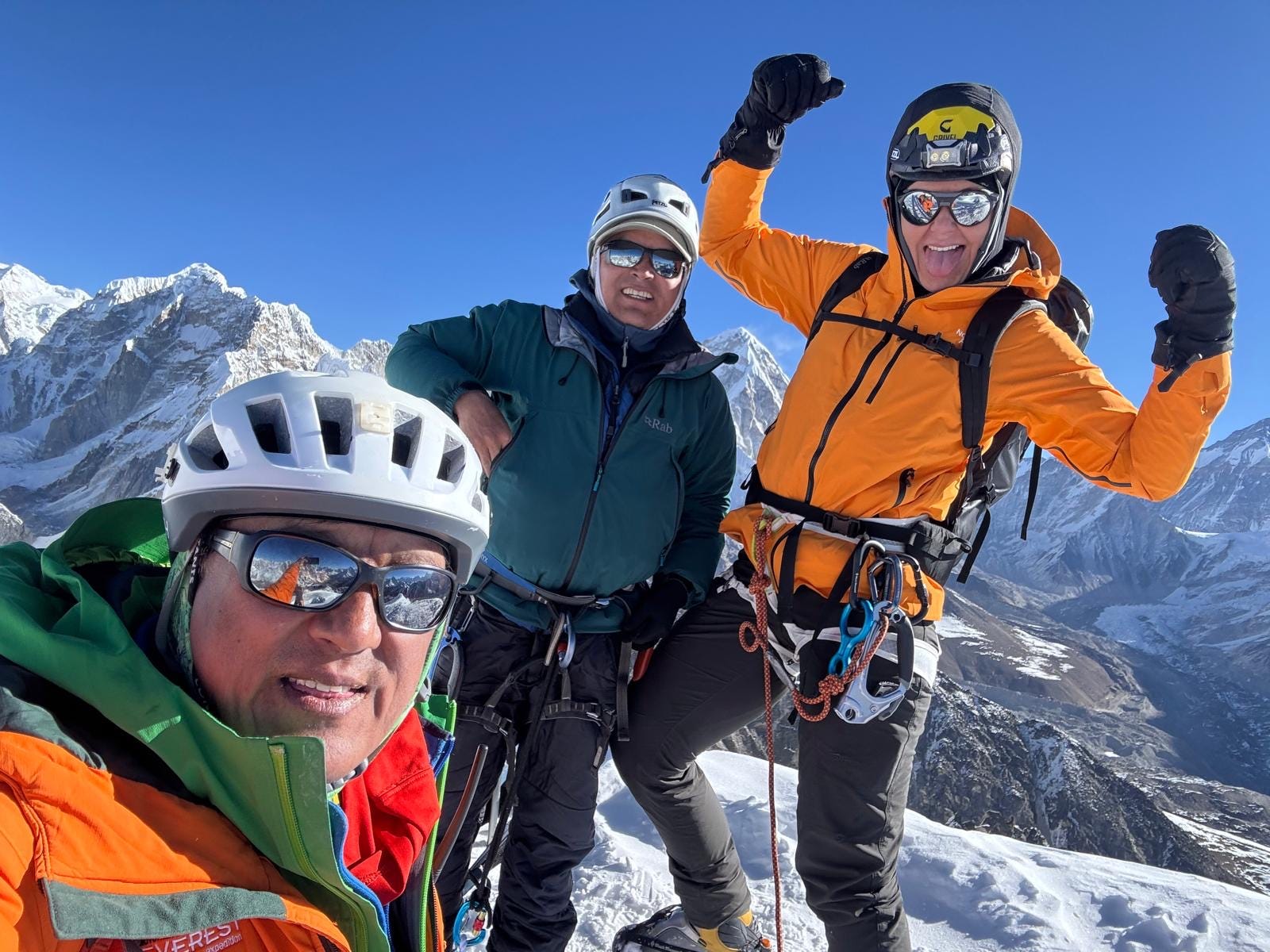
But you do not summit a mountain until you get back down safely.
That is the part people forget, because the photo is at the top and the story wants to end there, but the mountain does not care where the narrative peak is supposed to be. So we breathed it in, hugged, high-fived, let it land just enough to know it was real, but we didn’t stay long. There is no lingering in a place like that, only a few photos, a few deliberate deep breaths, and then the shift came almost immediately, the quiet but unmistakable awareness that we were not finished, that the summit was only halfway, and the thought that followed was as practical as it was confronting, now how the fuck do we get back down.
The descent was a different kind of ordeal altogether, where the suffering shifted from lungs, from the cardiovascular hell of ascending into ever-thinner-air, to something heavier and more brutal, the jarring, burning, joint-deep pain of gravitational impact. Spent and exhausted from the five-hour climb to the summit, we pivoted straight into moving down steep slopes with crampons biting into snow and ice, sometimes descending face-first with an arm wrap around the safety rope, sometimes leaning back into the exposure, rappelling on a figure-eight device, trusting the system in a way that felt very real now that the consequences were no longer abstract, and the pain settled into my knees sharp and persistent, every step sending a shock through a body that was already completely depleted.
It went on for hours, five or six of them, a relentless sequence of descend, stop, slump, breathe, gather, go again, and there was a kind of grim humour threaded through it at times, the shared recognition between us that this was hard in a way that bordered on ridiculous, and yet there was no choice but to continue, carefully, deliberately; my knees were screaming, my quads completely shot, every impact landing like the full weight of the mountain driving straight through my skeleton, and each time we reached the bottom of another fixed line we would collapse there for a moment, mutter our quiet, incredulous “holy fucks” at one another and laugh in that slightly unhinged way exhaustion brings, before pulling ourselves back together, reattaching safety lines, setting up the rappel, and going again, again, again. We knew. This is where mistakes are made, this is where accidents happen, and the only way through was exactly the same as it had been on the way up…
Slowly.
Slowly.
Ten full hours after we set out in the early hours from Lobuche high camp, we finally reached the end point, Lobuche base camp. There was a shared quiet release. Not theatrical. Physical. Exhausted high fives and floppy hugs. The simple, grounding relief that we were all alive, that we had all made it back safely, that we could now officially claim it. We were safe to mentally switch off. And so, my body stopped. Completely. My pack slid from my shoulders as I slumped at the doormat of my tent and let the afternoon sun hit my face, exhausted beyond anything I could properly name, deep into my bones and somewhere past that. I was only vaguely aware that, in the face of that kind of output, I had barely eaten, hadn’t been to the toilet for over ten hours, had been running on a bowl of porridge, a Snickers bar, a protein bar, some dried mango, a few almonds, sips of hot thermos tea and cold water, and so when the real food came out, hot soup and dal bhat and rice and fruit, I inhaled it like a woman possessed, like my body had been waiting impatiently and without manners for the chance to finally start rebuilding itself.
Afterwards, I went to my tent, peeled off layer after layer, and climbed into my down filled sleeping bag in my thermals (manky AF, but let’s not get into that) now on day ten without a shower. I pulled the sleeping bag hood up right over my head so only my mouth was exposed to breathe in the frozen air. There was no ceremony, just the quiet, almost overwhelming relief of warmth and nourishment both slowly returning to my body. I lay there for hours in a kind of drifting state, not fully asleep, not fully awake, feeling the exhaustion pulse through me in waves, the ache settled deep in my muscles and joints. There was no part of me trying to make sense of what had just happened, no urge to extract meaning or lessons, just the simple act of recovering, of letting my body begin its slow return.
Survival after the fact.
Reflection and recovery came slowly, in fragments, as we walked ourselves all the way back out of the valley, descending in sixteen and twenty kilometre chunks at a time through Pangboche and on toward Namche and eventually Lukla, my knees still sharp with pain, my finger (probably fractured) bruised and quietly throbbing from a clumsy slip in the dull fatigue of the day after, my lungs gradually finding more oxygen with every step down, as though it was remembering something it had been missing. We said goodbye to Puh Tashi in Pangboche, staying one night with his family at their teahouse before leaving him there at home, and from that point on it was just Ang Dorje and I, moving through terrain that no longer felt quite so hostile, not easier exactly, but softened somehow, less threatening, as though the mountain had already taken what it needed from us. Had already shown us what it needed to convey.
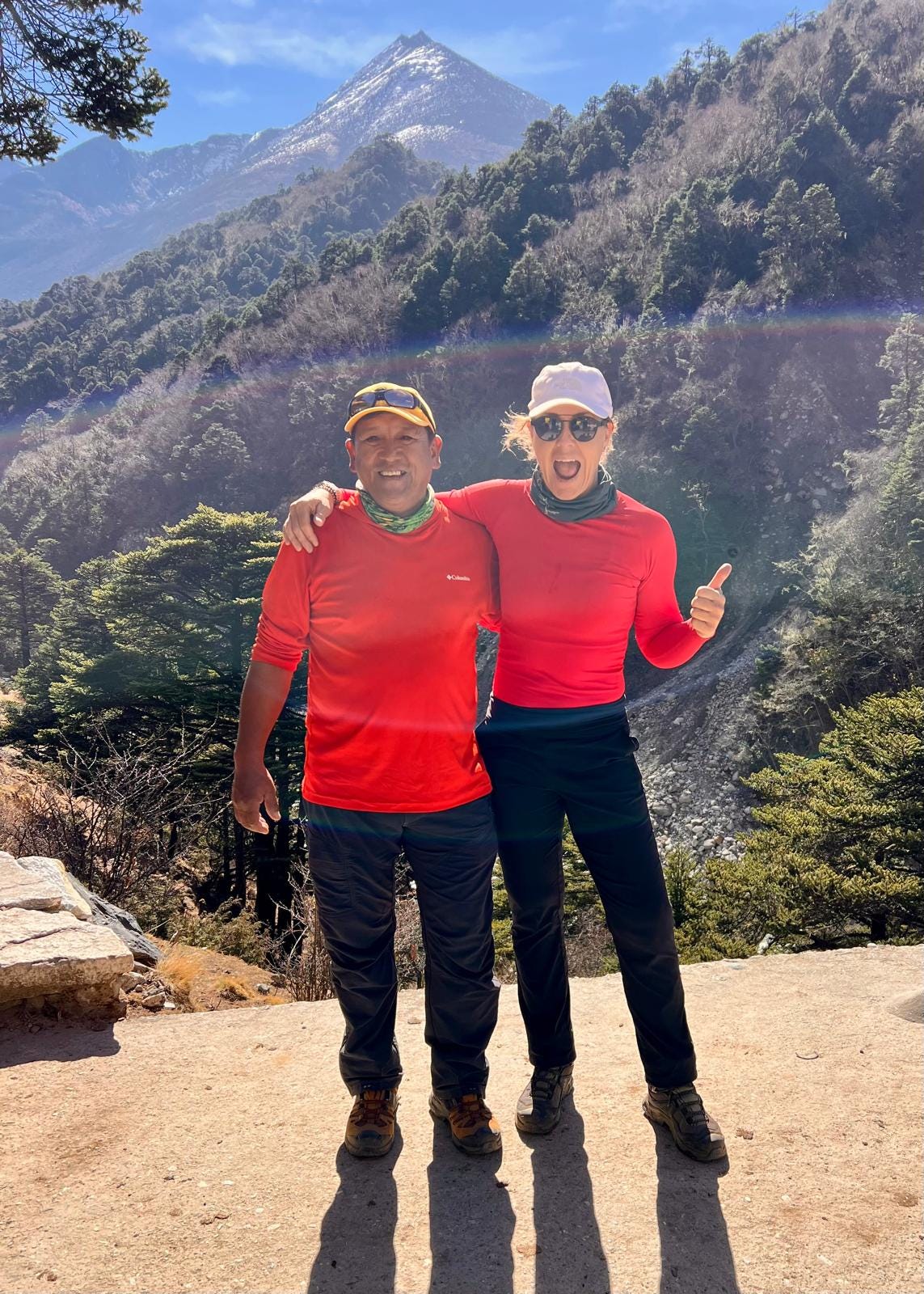
And then, finally back in Lukla, with nothing left to climb and nothing left to prove, just rest and food and time spent waiting for the helicopter back to Kathmandu, it all began to land properly, in that quiet, steady way, in the space that opened once the doing was done. A deep, widening sense of pride, yes, but more than that a kind of reverence and respect for my body that felt new, or maybe just remembered, an understanding of what it had just carried me through. I remember feeling that same quiet awe after childbirth.
And now here, in this slow tropical place – it all keeps landing – in the rising hesitation and reluctance I feel to step back into the pace of the woman who boarded the plane to Kathmandu a month ago, knowing that something has shifted and I don’t want to give it back. I can feel how easily it could be lost, how quickly I could slip back into rushing, overcommitting, scattering myself again.
And I don’t want that.
Not now. Not after remembering what it feels like to give something my full attention again, to listen and move at the pace my body actually requires, not the one I used to force upon it.
Because I didn’t come to this mountain blindly. I came here because I was about to turn fifty, and I wanted to meet that moment standing in a body that felt strong, capable, alive. I wanted to prove to myself, in a way that couldn’t be argued with, that I could still do hard things. That I could set something big, physical, confronting, and see it through. I wanted to arrive at fifty feeling vibrant, energetic, proud.
And I do.
I nailed that. BOOM.
But the mountain gave me something else entirely.
What I got was the lesson I have been circling for a few years now, ever since I walked away from my career in HR burnt out and frayed, quietly aware that the way I had been living was costing me more than I wanted to admit. In the years since, I’ve been returning to the same set of truths, saying them to myself in different ways, writing them down, talking about them, coaching myself and trying to live them, and yet never quite landing them fully in my body. A persistent soul-level-knowing that I needed to slow down, that I needed to move at a more sustainable pace, that I needed to stop taking so much on, stop scattering my attention into fragments, stop mistaking urgency (especially other people’s) for importance, stop letting noise decide the shape of my life.
I’ve known it. I’ve said it. Written it. Talked about it. I’ve tried to build my life around it, to be more aligned, more deliberate, less reactive, less driven by that constant pull to do more.
Less, but better.
It was hammered it into me with altitude and weather and rock and ice and fear and exhaustion. It showed me, in a way I could not ignore or soften, that there is no way to do something hard and meaningful without full focus, no way to arrive safely if you rush, no way to keep going if you do not listen to your body, no way to climb while carrying every piece of noise from the life below.
The summit was the proof that I can do hard things. Ticked that box, yep.
S L O W L Y S L O W L Y was the lesson…
Slowly is how you do anything that matters.
Slowly is how you manage fear, not by eliminating it but by reducing your world to what you can actually control.
Slowly is how you stay present when your mind wants to run ahead into overwhelm or drag you backwards into doubt.
Slowly is how you build something that lasts, how you move in a way that your body can sustain, how you live in alignment with what you say matters to you instead of being pulled apart by everything that demands your attention.
And I can feel, sitting here now, how easy it would be to lose that again, how quickly the world I came from could reassert itself, emails and obligations and opportunities and noise, the subtle pressure to speed up, to take more on, to split myself across too many directions at once.
Bistarai, bistarai.
What I got from this whole crazy mid-life quest was much more than what I had set out to find.
I am not in a hurry to forget any of it.
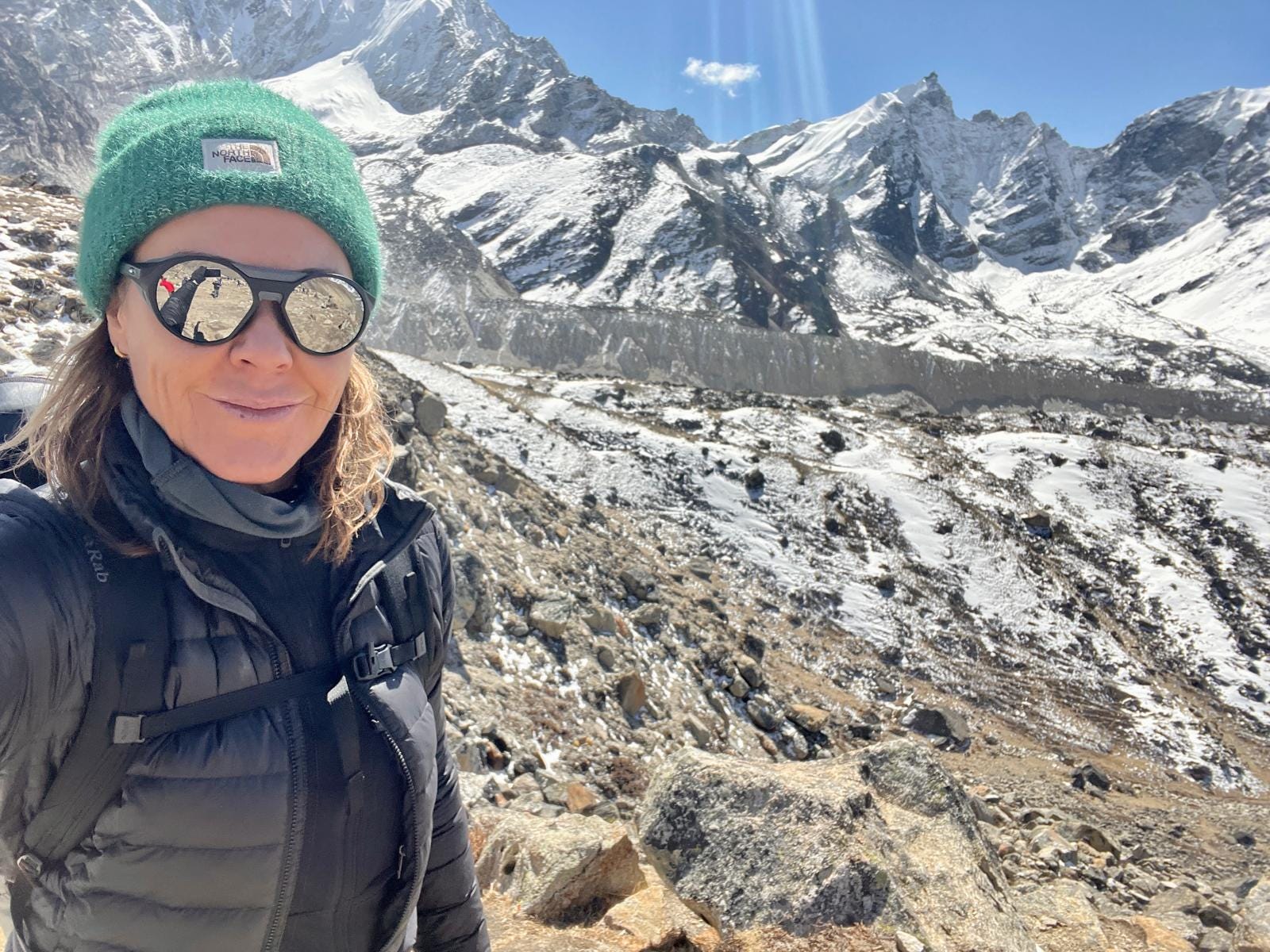
Rach Taylor is a high-performance career and life coach, life after sport and athlete transition coach,
wanna-be-mountaineer, speaker, Olympic medallist, and former senior HRguruleader. Rach brings Olympic-level insight, real-world HR and leadershipscarsexperience, a geeky obsession with human optimisation, and a no-BS, heart-led approach to every space sheplaysworks in. Based in Perth, Australia. Working with clients and collaborators globally. Check it out rachtaylorcoaching.com