[!Name Drop Alert!] Trent Cotchin interviewed me on his Shaped podcast recently – and for two ex-athletes sitting down chewing the fat together – we barely touched the topic of sport (thank fark). He’s not interested in the usual athlete scrapbook and accolades. This man has been there done that; and he goes straight for the seam. He asks the kind of questions that make you inhale and recoil ‘owwww oucchhhy are we really going to go there’?
When we finished recording, I sat for a long time looking at the steering wheel of my hire car thinking, how the hell did we cover all of that ground? And am I really ready to share that much of myself in public? (mmmm well, too late now Rach, the cat is well and truly out of the bag). It kind of felt like walking out of a room with the fluro lights having suddenly been flicked on, blinking, a little exposed, a little proud, a little terrified. Gotta say though, there’s also a special kind of relief that comes with it. Fuck it feels good to just bloody-well-own-your-truth; all of it. Get it out there.
Because the shitty reality is, along with many other ‘strong women’ I know, I too have a long history of subjugating my needs and muting my voice. Sometimes to keep the peace. Sometimes to be liked or appear as the ‘nice, good girl’. Sometimes to control outcomes without ever looking controlling. Sometimes because I didn’t think there was space for me to take up any more room than I already did (often this came after having been told, by men usually, that I was too ‘intimidating’).
All in all, not a small admission for a woman who kind of made multiple careers out of appearing to be strong, unflappable and unshakeable.
But this bullshit of subjugating my needs, muting my voice, performing the “strong, unshakable one” like it’s a full-time job – it’s exactly that. Bullshit. And more than that, it’s not coming with me into the next chapters of my life.
Four or five years ago I started to see it clearly. Before that, it was just an unconscious mask – highly polished and highly rewarded. And yep, this is a mask I took pride in and I wore well. But I’ve been outgrowing it – deliberately. Peeling it off in slow, uncomfortable strips. Evolving past the reflex to be the strong one. Choosing instead to be unapologetically who-the-fuck-I-actually-am. And the more I let the façade drop, the better my life gets.
So, yeah, I’m grateful [!Namedrop Alert!] Trent Cotchin drilled into my backstory as deeply as he did. Because I’m bloody-well-nearly-50-years-old. I’ve lived a rich, strange, textured life. Rowing was never the whole story. Not even close. In fact, sport and the whole Olympic caper, while undeniably hardcore and objectively cool, feels like the least interesting chapter to me now.
For sure, it was an epic training ground (especially if you want to master the art of appearing to be ‘the strong one, the unflappable unshakeable one’). It was where I perfected the art of overriding myself.
Pain? Ignore it.
Doubt? Bury it.
Needs? Irrelevant.
Row harder.
I got very, very good at abandoning myself in the name of performance… as the world cheered me on and applauded.
The real forming – the deeper shaping – happened later. Sans sport. It happened in the complete loss of self and the slow gritty re-finding. It happened in the daily trenches of a relationship stretched to snapping point by the sheer pressure of farking adulthood. It happened in the underworld of betrayal. The kind that rearranges your cells and makes you question your own instincts, your own memory, your own sanity. It happened in the grey, humming, dead-behind-the-eyes experience of burnout. It happened in the mind-numbing exhaustion; the bone-deep overwhelm of early motherhood.
That’s where I was shaped and formed. In the constant slow-painful-unravelling, and in the equally constant gradual-picking-oneself-back-up and rebuilding again-and-again-and-again.
Through it all, I gradually awoke to the quiet dawning that being strong had become a galvanised identity. Fused on. Hard to prise off. And as more years passed, I could feel, intuitively, that this identity was costing me something – something I didn’t yet have the language for, but felt all the same.
I didn’t become the strong one because it felt cool or empowering. I became strong because there wasn’t really any other choice. Being strong was what I saw all around me as a child. Generations deep it runs.
I grew up on a farm in rural Victoria, in an Irish Catholic family where stoicism was currency, and hard work and usefulness were praised. Being needy or whiny was inconvenient – possibly punished. Emotion was either private or swallowed. Stiff upper lip and all that stuff… You learned early what earned a nod of approval. You learned early what meant you were left alone. I’m not saying it was right. But it was the air in which I first learned to breathe.
When rowing found me at fourteen and some dude in a white jacket in a sports science lab told me I had the physiological capability to be great, it slotted seamlessly into that ‘strong’ conditioning. Be disciplined. Be tough. Don’t complain. Grind. Perform. That’s how you get attention. That’s how you matter. That’s what you do. Yep, that’s how you roll.
Success and strength fused together in my nervous system from a young age. It wasn’t some flaky belief system I could just think my way out of. It was utterly hard-wired.
By the time I was walking away from the fierce, aggressive, highly competitive maelstrom that is international sport in my late twenties, the “strong, unflappable, unbreakable” conditioning was at its absolute peak in me. By then, I was a high-calibre fucking weapon. And that probably made me a very attractive proposition indeed – to future employers, even to some future partners.
I was independent. Driven. Low maintenance. Highly capable. The get-shit-done-and-get-it-done-properly kind. I didn’t need much, or at least I looked (*very carefully appeared) like I didn’t. I could take care of myself. I could take care of others. I could absorb infinite pressure and just keep moving. I had evidence to back it allll up. Just look at my shiny medals, ya’ll… Hmmm. Yes indeed. She reads well on paper. She also reads very well in that particular season of life when everyone is building something: careers, houses, families, businesses, babies, finances, blah blah blah. Being the strongest and most highly capable one in the room is super fucking useful in that season. You become even stronger. The reliable one. The ‘safe pair of hands’. The one who won’t fall apart. The one who doesn’t ask for too much. The one who can shut up and take it. Yep, that’s how I roll. Bring it fucking on.
But over time, something subtle happens when strength keeps hardening into identity.
People stop checking in. Care and assistance taper off. Apparently, you don’t look like you need it, mate.
It’s not malicious. It’s logical. You seem fine. You’re always fine. You’re the one holding everyone else (for fucks sake). You don’t cry or crumble easily. You don’t wobble publicly. You don’t ask for much. So eventually, people stop offering much. And the quiet tragedy is: you participate in it. You train people how to treat you. You teach them what’s required. And what isn’t.
You become so good at being “fine” that “fine” becomes the only language anyone speaks to you.
In my relationship, and as a mother to two young, sleepless boy-creatures, I felt completely responsible, utterly obligated, and permanently overwhelmed by the mind-boggling juggle of holding it all while trying to appear unflappable, strong, unshakeable across every domain of life. I was the emotional caregiver. The caretaker. The one who could regulate, smooth, anticipate, manage. I told myself I was resilient. I told myself I was built for this. When the going gets tough, the tough get going, right?
But what I also was, increasingly, was alone.
And it’s a loneliness very different from being alone in an empty house. It’s the saddest kind: being surrounded and still unmet. Unseen. Muted. Still the strong one. Still the capable one. Still the unflappable, unshakeable one. Only now it feels like you’re stranded on a deserted island – still handling fucking everything – except it’s an island you single-handedly swam yourself out to. Willingly, no less.
It’s being admired for your strength while secretly wishing someone would insist on seeing the parts of you that are tired, frightened, unsure. It’s being loved for your independence while quietly craving someone solid enough to hold you when you don’t want to be the fucking strong one anymore. It’s the slow ache of realising that the very thing that makes you impressive is also the thing that keeps you untouched. People love you like a statue. Admired. Respected. Impressive. Cold. The heart hardens to stone.
And if you’ve spent decades perfecting the art of not needing much, you suddenly realise you don’t actually know what you need, let alone how to be met. You only know how to perform competence. You only know how to endure. You only know how to succeed. You do not necessarily know how to say, I’m not okay. I can’t be fucked being the one keeping it all together. I can’t keep fixing it all by myself. Again.
And again.
And again.
But thankfully (I guess), life has a way of slapping-you-down and schooling-your-busted-ass at precisely the moment you need it most. Some things are simply too big to carry alone, no matter how strong you told yourself you are.
Eventually the compounding shitstorm of your particular brand of adulthood smacks you flat and the body calls time. Eventually the edges of the mind will start to fray like a pair of 1990s denim shorts. Eventually the edges of the mind start to fray like a pair of 1990s denim shorts. Eventually the tiny cracks you’ve been proactively ignoring become the fault lines the whole structure caves in through.
It ain’t pretty.
In the conversation with [!Name Drop Alert!] Trent Cotchin, we spoke about the slippery slide into burnout. The dark depths of betrayal. The slow erosion of a relationship and a family. The shitstorms. The underworlds. The clusterfucks.
Sure, I had built a life that admired my strength. But it was also a life that didn’t nourish my vulnerability. And I hadn’t just participated in that dynamic. I had curated it.
I had signalled, consistently, that I didn’t need holding. So people believed me. They believed the mask because I wore it so fucking well. Like I did everything. They believed the competence because it solved their problems. It served them. And it’s a tough veneer to crack. The dismantling of the strong-one identity.
Loneliness for strong women (and men) isn’t about the absence of people. It’s about the absence of being known; of being seen. It’s sitting at the end of the day, after you’ve handled the logistics and the emotions and the work and the children, and realising no one has asked how it actually feels inside your body. Your heart. Your mind. Are you ok? And if they did ask, you might not even know how to answer without defaulting to “I’m good,” because “I’m good” has been your passport for so long that you can’t imagine travelling without it.
In a relationship, strength without vulnerability creates distance. In corporate life, resilience is applauded. In intimacy, however, this relentless resilience can feel like a wall.
That conditioning is powerful. It brought me Olympic medals. Higher degrees. A great career. A beautiful-looking family. It brought me admiration. It gave me the capacity to rebuild after everything fell apart. It opened doors I couldn’t have imagined when I was a young farm kid from Ballarat, freezing on a lake at sunrise. It had a purpose. For a time.
It also eventually brought me to a deeply uncomfortable truth: strength, on its own, does not guarantee love. Sometimes it repels the kind of love you most desire. People assume you don’t need tenderness. Men, often, feel comfortable being ‘held’ by you but are less certain how to ‘hold’ you. Friends lean on you because you’re safe and solid, then forget to ask what it costs you to be that solid.
And when you make a life out of self-sufficiency, interdependence can feel foreign, almost embarrassing. Like a language you were never taught but are somehow expected to speak fluently. It’s a tough gig to recondition this engine, let me tell you. But it’s possible. I’d argue its necessary. Essential if you want a life that feels healthier. More sustainable. Actually loving.
The most radical, and best, thing I’ve had to learn in my late forties isn’t how to achieve more. It’s how to soften; how to slow down. How to move in the opposite direction to what my conditioning has been screaming in my ear for four decades. How to catch the moment my body says no before my mouth says yes. How to need more (and actually articulate it) without packaging it as a joke. How to risk being perceived as less composed, less invincible, less impressive. How to let someone meet me without instantly reaching for my own toolbox. How to drop the whole stupid, exhausting strong-one façade.
Strength got me here.
But it isn’t the story anymore.
Finally, I’m aware enough and brave enough to let that be true.
Let it farking go.
Here’s to living the rest of my days without being the strong one.
Farking adios, amigo.
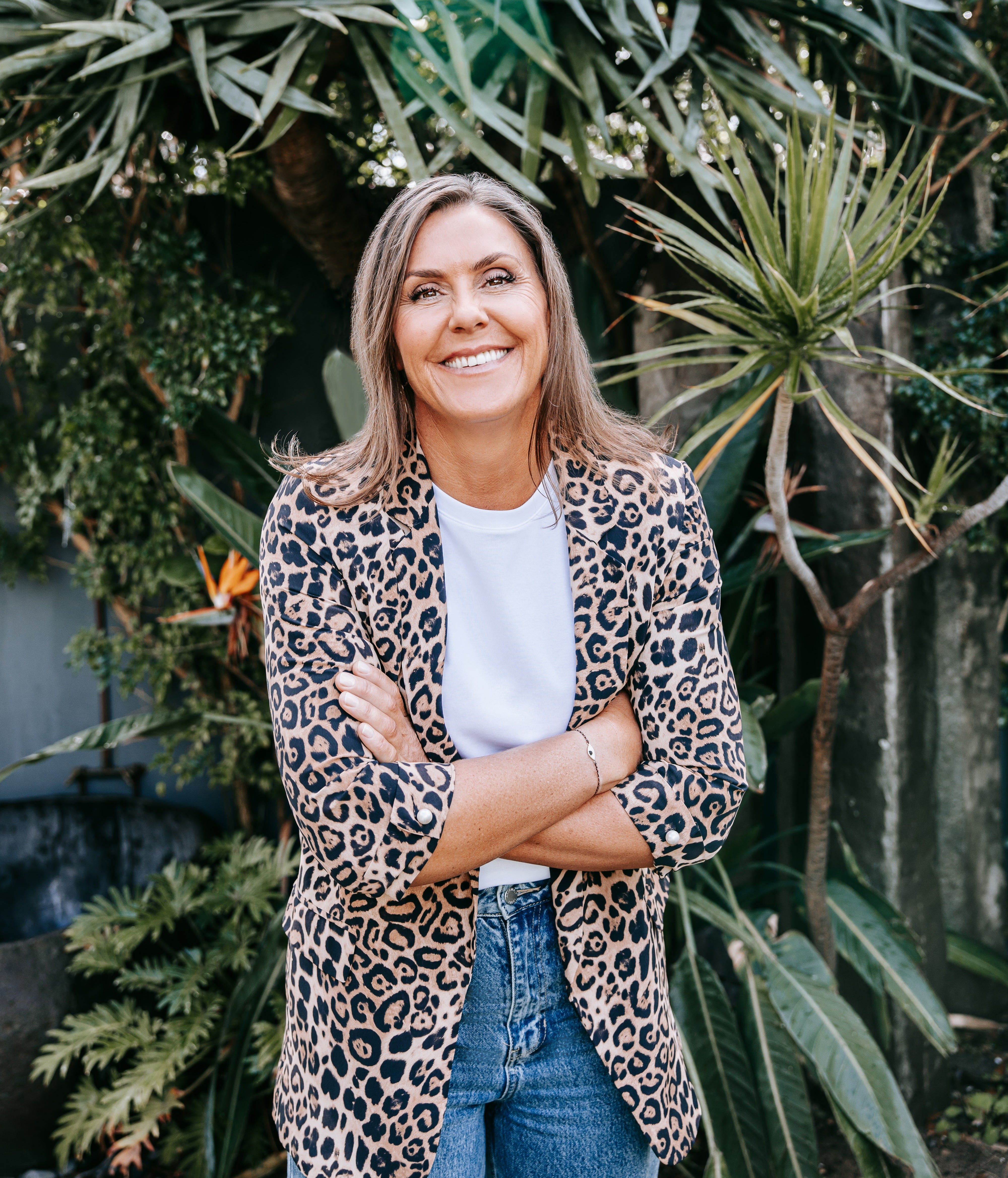
Rach Taylor is a high-performance career and life coach, life after sport and athlete transition coach,
wanna-be-DJ, speaker, Olympic medallist, and former senior HRguruleader. Rach brings Olympic-level insight, real-world HR and leadershipscarsexperience, a geeky obsession with human optimisation, and a no-BS, heart-led approach to every space sheplaysworks in. Based in Perth, Australia. Working with clients and collaborators globally. Check it out rachtaylorcoaching.com