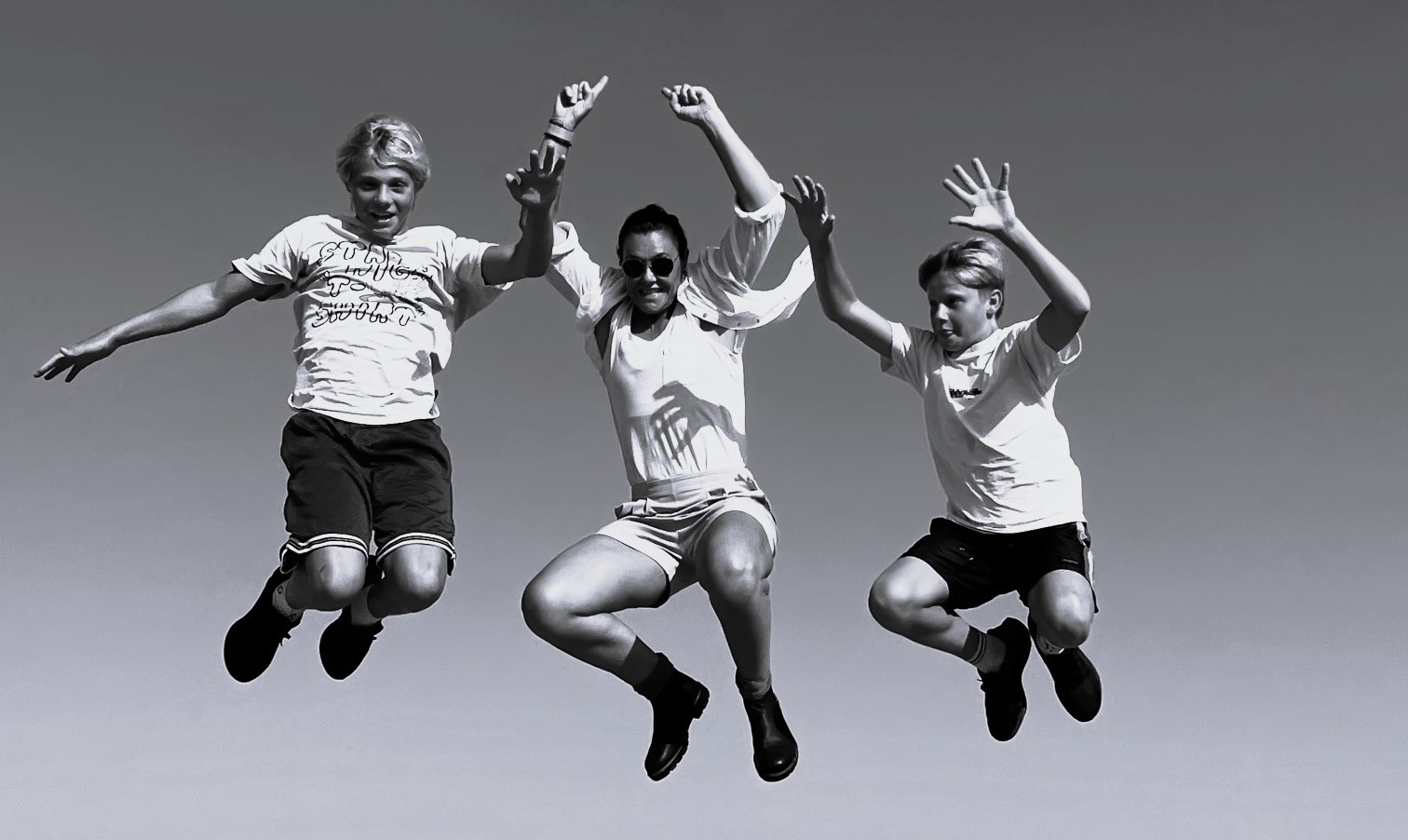
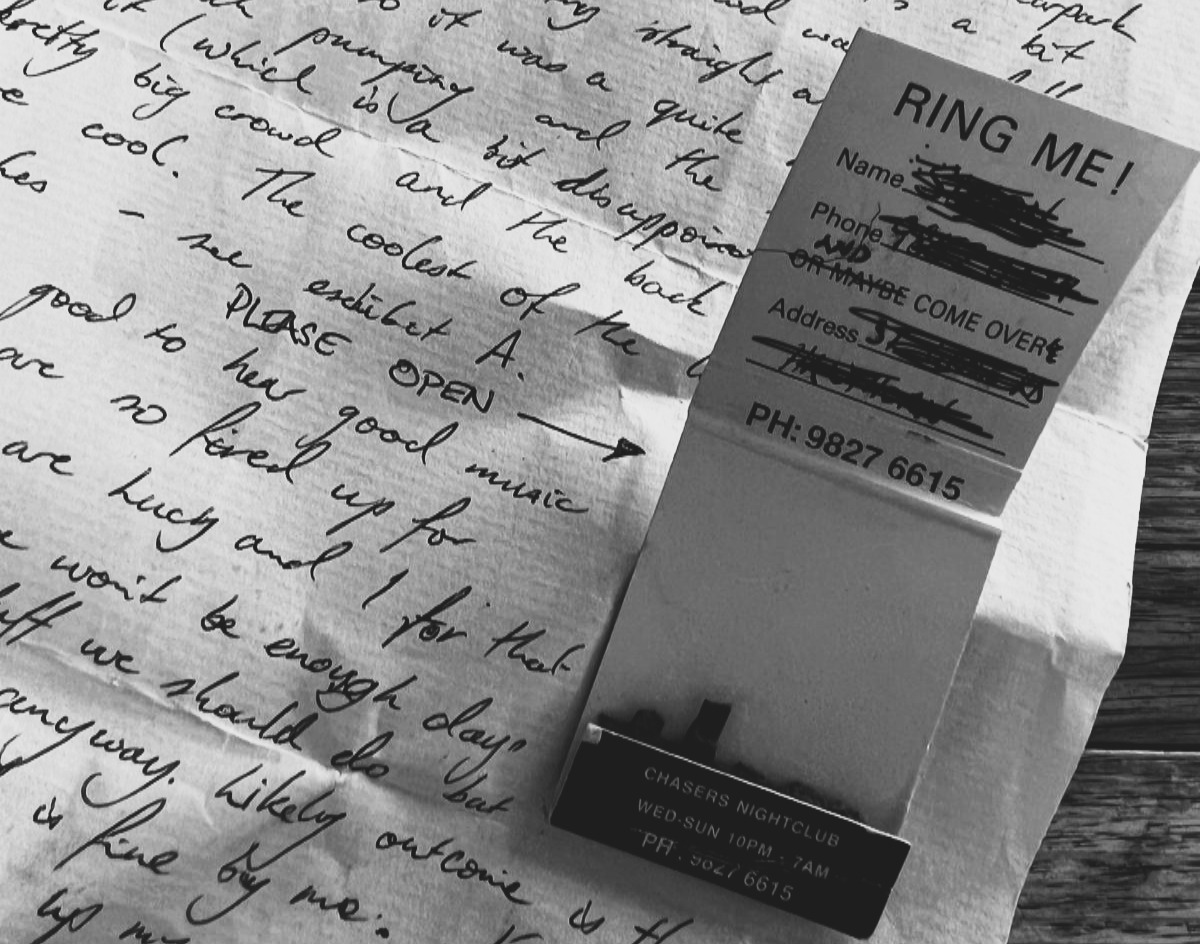
For those in transition – dissolving, rebuilding, and learning to fly again. You are not broken. You are becoming.
When I walked away from my sporting career, people called it retirement. They spoke about it like it was both an achievement and a line in the sand – an athlete closing one chapter, then simply opening another.
But it didn’t feel like that. It felt like a slow death. One day you’re an Olympian – an athlete, a somebody. The next, you’re just another person wandering the streets of a place that used to feel like home, trying to work out what the fuck you’re supposed to do now.
There’s no finish line for identity collapse. No medal for unravelling. Just the dull ring of space, loss, and silence after the crowds stop cheering and there’s no more training to be done.
I didn’t have the language then, but that was my first chrysalis – the quiet disintegration before the next evolution. At the time I mistook it for failure. I thought the disorientation and floundering meant I was doomed, lost forever. But I now know, I was dissolving – liquefying the self I’d been trained and conditioned to be so that something truer could emerge.
In the dictionary, “chrysalis” is defined as a transitional state. It’s also the pupal stage of a butterfly.
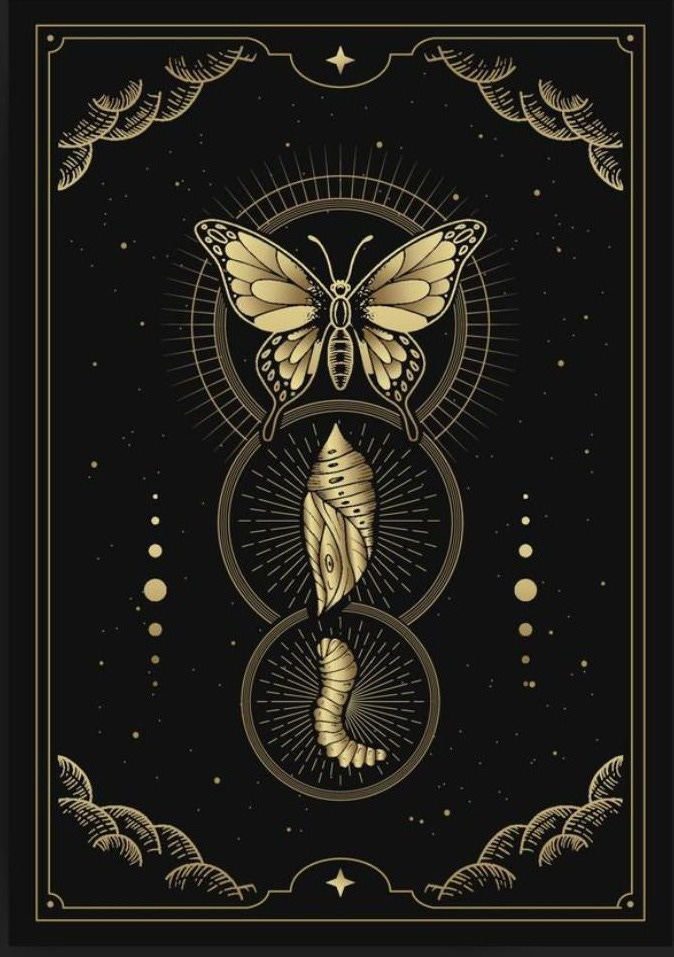
When the caterpillar is fully grown, it spins a small button of silk to fasten itself to a leaf or twig. Then, in an act of surrender, its skin comes off for the final time. Beneath that old exterior lies a new form – a hard casing known as the chrysalis.
Inside the chrysalis, the real transformation begins. It’s dark, gooey, and unrecognisable; everything that once was dissolves so something entirely new can take shape. And eventually, from that quiet, unseen alchemy, a winged creature emerges – lighter, freer, and built for flight.
It would take another seventeen years, and a much darker descent, for me to really understand that pattern.
The Underworld
On the morning of 27 May 2017, my youngest brother Luke went out cycling – a simple weekend training session on his road bike. He never came home. A 4WD failed to give way. The impact pulverised him. Both femurs shattered. Pelvis torn open with multiple fractures. Elbow and humerus smashed to pieces. Tibia, fibula, ribs, vertebra; all grievously broken. His bladder split. His kidney bruised. The list went on.
Splintered shards of his carbon bike frame and a shattered Giro helmet were left strewn across the road, pieces lodged in the front grill of the 4WD. His body carried gaping wounds filled with gravel and dirt that would later invite infection – a grim marker of the violence of the impact, and of the fight for life that was about to begin.
Luke’s broken, bloodied body was airlifted to The Alfred Trauma Centre, where he was resuscitated on arrival. I got the sickening phone call from my mum, then cried my way to the airport – and sobbed all the way to Melbourne – three and a half hours on the first flight out of Perth.
I joined my family in a fluorescently lit room with hard plastic chairs, a space allocated for such purposes within the suffocating stillness of the ICU ward.
We waited for updates. First, we were told they were doing all they could to save him. Then: they were trying to save his legs, but he may lose the right one. Fourteen hours of emergency surgery later – the first of many – Luke lay in ICU, a body of metal frames and tubes, sedated, intubated, and held in an induced coma. Barely alive. The doctors used the phrase “critical but stable” in that cold, measured tone that really means it’s a fucking coin toss.
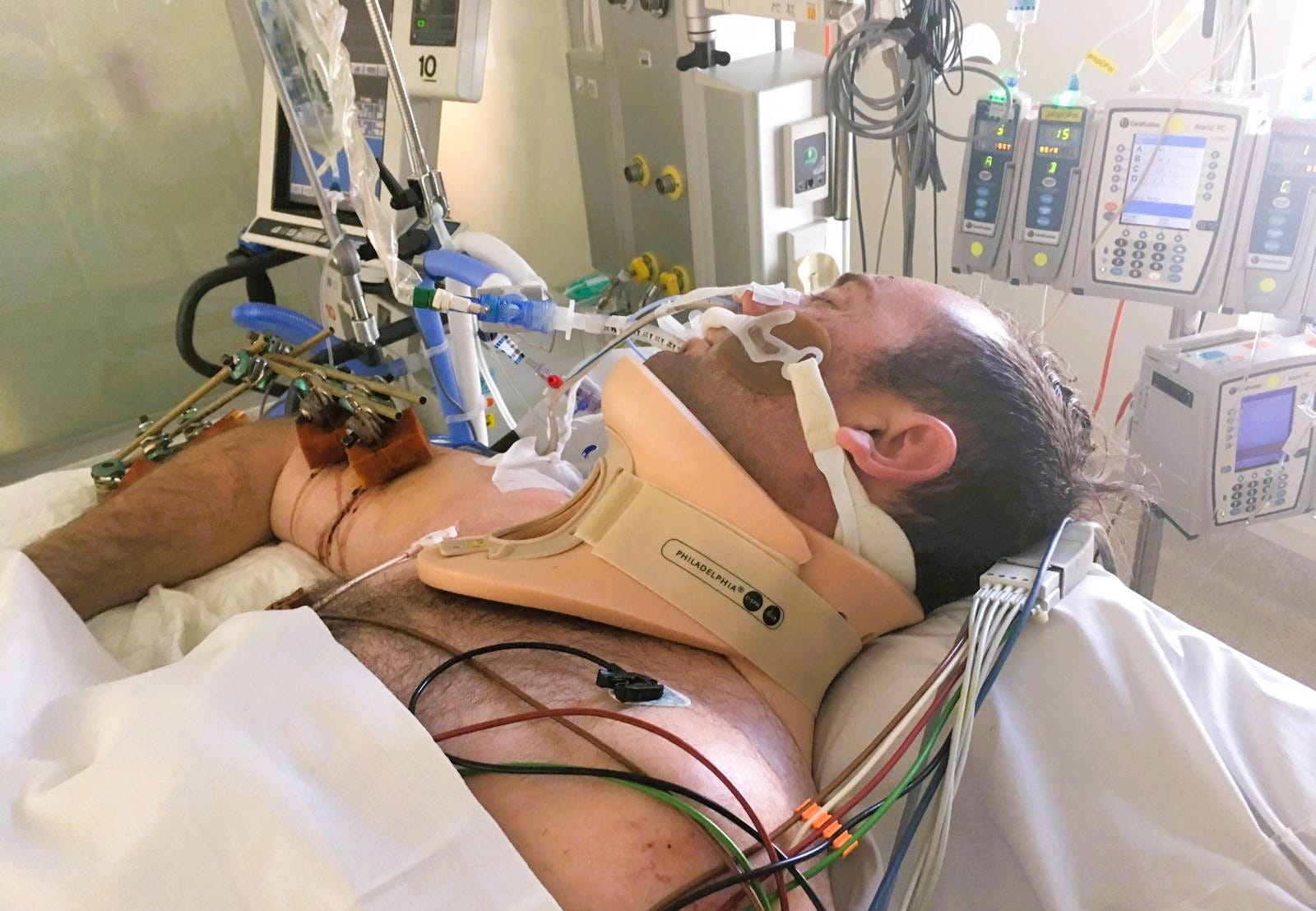
All of our lives had just turned to shit. And Luke was hanging on by the skin of his teeth.
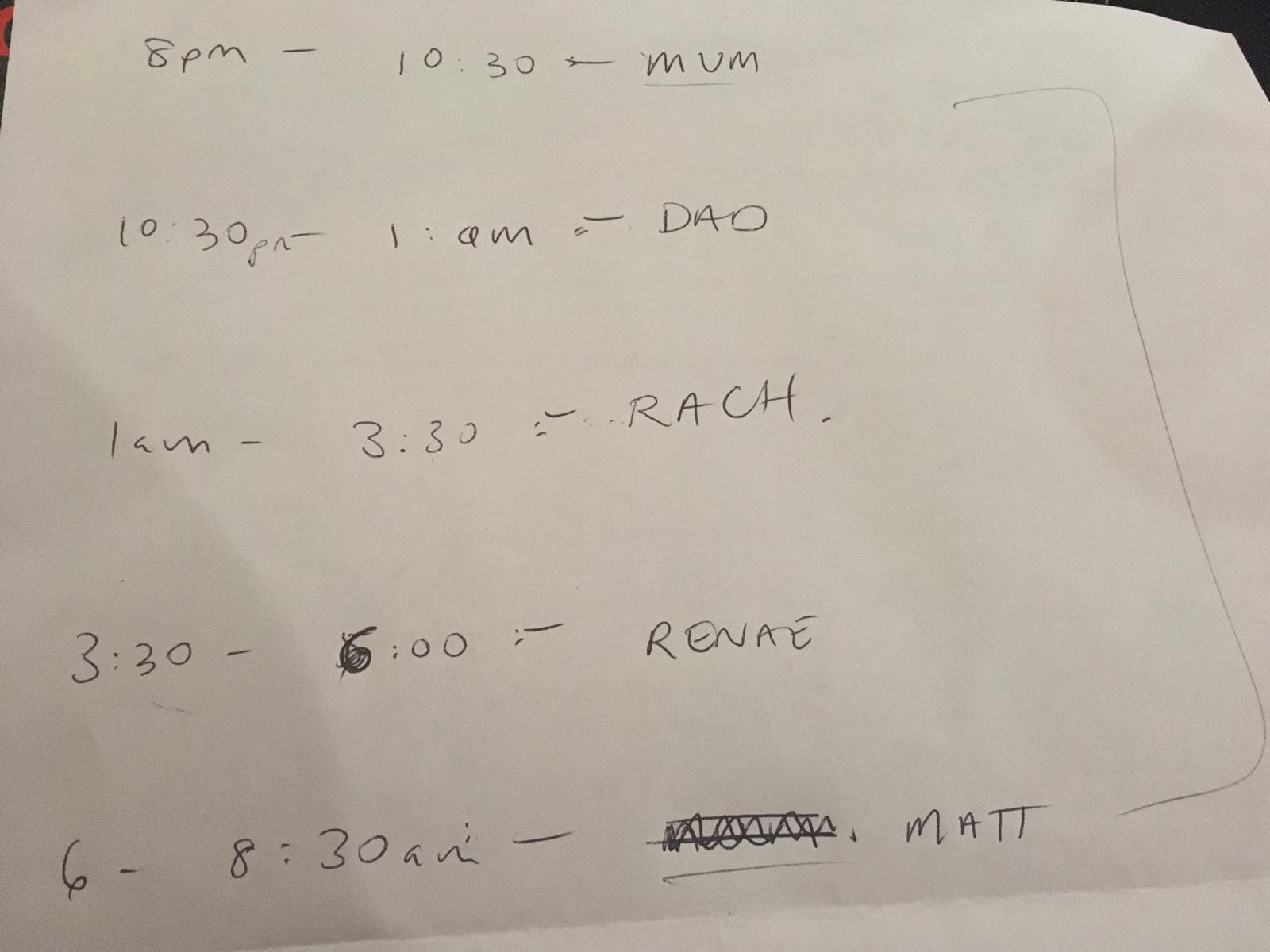
We became a family of witnesses. We quickly rented a soulless Airbnb near the hospital and built a vigil. We drew up rosters on spare scraps of paper – who would sit beside him, who would rest, who would liaise with doctors. Luke would never be left alone. He would not die in there alone.
The days blurred into a haze of ICU visitor badges, hospital instant coffee, constant surgeries, the hiss and beep of machines, the smell of antiseptic and the relentless pulse of adrenaline. His body was a map of medical intervention – rods hammered down what was left of femurs, plates and screws through pieces of pelvis, titanium and traction holding shards of bone together. It looked, all at once, like a horror scene and a war zone disguised as healing.
In those first weeks we celebrated tiny miracles: he squeezed a hand, flickered an eyelid, whispered through a freshly extubated throat. The smallest signs of life felt biblical.
But survival has layers. ICU gave way to the Alfred Trauma Ward, then eventually to the long months we’d spend supporting Luke at the Epworth Rehab Hospital in Richmond. From the outside, it looked like progress. From the inside, it was the slow-motion choreography of hell.
Winter turned to spring, then to summer. Each a new season of endurance. Each spent inside the sterile hum of hospitals – the same air-conditioned staleness, the same fluorescent light – measuring time not by calendars, but by visiting hours and surgery updates.
The Double Life
I was 41. Flying back and forth every few weeks between Perth and Melbourne. Mother, daughter, sister, partner, employee. Holding too many worlds at once.
Parenting and holding the collapse of my relationship in one hand while sitting vigil in a trauma ward with the other. My family in Perth breaking down; my family in Melbourne in open crisis.
What no one knew – not my parents, not my siblings, not Luke lying there in traction – was that in the months leading into Luke’s accident, my partner of 14 years and I had been privately working through the early details of our separation. The relationship had been under immense pressure and dying a slow death for some time. We were working through the complete clusterfuck that is a family breakdown: logistics, childcare arrangements, finances, timing. But then Luke’s accident happened, and now all my worlds were collapsing at once, into an abyss of fear, turmoil and chaos.
Luke and my family in Victoria were in the eye of a cyclone that showed no signs of abating. I told myself it wasn’t the time to add more pain. I made a deliberate decision to put the greater needs of my family first. This was not the time to tell my parents, my sister, or my other brother that my own life back in Perth was also in the eye of an equally ferocious storm – everything was breaking, crumbling, collapsing. I told myself I would wait until Luke was stable. It was not the time to add more pain.
It would take me years to recognise that choice for what it really was – a quiet form of self-erasure, disguised as duty. As a mother, I’d already performed that act many times before – and I would be forced to do it again – with the deep betrayal of my closest friend looming. I didn’t know it then, but this next storm was already forming – a black cloud on the horizon, waiting for its moment. When it broke, it would drop me through the trapdoor to the darkest level of the underworld, kicking me down while I was on my knees.
What the hell does one do when everything is completely and utterly fucked?
One is left with no choice other than to carry on. I became the efficient daughter. The organiser. The get-shit-done-sister. I posted GoFundMe updates, thanked donors, became Luke’s power or attorney, managed his affairs; I told the media to fu*k off, engaged lawyers, suffered insurers, kept people informed. I wrote gratitude by day and cried alone at night. I never mentioned that my ‘other’ life was also breaking. I figured I’d just have to just deal with it for now and drop that bomb later.
The universe was burning it all down at once: my relationship, my family, my friendships, my identity. The whole structure was being dismantled in slow motion, and I had nowhere left to grip.
Descent
When people talk about a dark night of the soul, they make it sound like a poetic eight-hour overnight stint. It isn’t. It’s administrative as much as existential. It’s hospital car parks, blood transfusions, legal emails, the right-royal-fuckery of insurers and a merry-go-round of airline bookings. It’s writing updates that give others hope while your own nervous system is detonating. It’s whispering to your brother through a ventilator, then stepping out of the Alfred ICU into the wet night air and the glare of Commercial Road, Prahran, at 3am. Your breath is white. You walk in stunned silence. You pass the same shopfronts, the same taxi rank, the same glowing pharmacy. You cross at the same lights that someone else will cross later to tell a nurse, another one of the family’s here – it’s time to swap again. Your body runs on adrenaline, coffee and red wine. You learn to eat when you can, sleep when you can’t. You become a person who knows the names of ICU nurses on three different shifts. You start to understand that some things don’t get solved – they get survived.
The dark night of the soul was a descent into the underworld. Not a metaphor. A reality.
A darkness that stayed with me for almost two years.
This was the real chrysalis. The one that swallowed absolutely everything. It is not a neat cocoon. It is a liquefaction of the old structure. The organism breaking itself down to rebuild with the same raw material arranged differently. From the outside nothing moves. From the inside everything dissolves and reforms. Complete liquefaction. My relationship, family and friendships dissolved. My hopes, beliefs and illusions dissolved. My ego dismantled and torn to pieces. The woman who could previously manage it all dissolved.
It felt like all was lost, but yet I recognised the process – a familiar mirroring of my transition out of elite sport many years earlier.
What was happening was the quiet death of an old self. That version of me way dying in the months I walked Commercial Road in the Melbourne winter in the dead of night, hot tears streaming down my cold face. I did not notice at the time. Deaths like that are not dramatic. They happen by subtraction. Everything just gets stripped away.
And slowly, painfully, something new begins to form.
Emergence
The point of a chrysalis is not the cocoon. It’s the emergence.
When I finally left the relationship, there were no fireworks, no dramatic exits – only quiet certainty and a new lightness. I was beyond done. I didn’t need to shed more tears. I had already grieved it from within.
I didn’t step out of that season clean and shining; I stumbled, staggered, then steadied, slowly constructing an up-levelled version of me, building an up-levelled new life. In some circles they call this post-traumatic growth.
It took time, but I rebuilt from the ground up – career, autonomy, psyche, finances, family, home, identity, health. I learned to trust my intuition – not tentatively, but deeply. I became a woman who could stand in any room and not shrink. I consciously whittled my world down to a front row of the highest calibre of people – those who see me clearly and stand beside me with integrity. I felt stronger, wiser, and more aligned than ever, becoming who I was always meant to be. I became someone my sons could finally see shining brightly again. And continues to.
Unlike a beautiful butterfly suddenly emerging from a cocoon, there was no finish line, no single aha moment – just a slow, steady emergence.
There is no hack for this process. There is only time, acceptance, surrender, and the quiet knowing that you cannot climb back into the skin that no longer fits.
This unfolding took about two years – almost the same time span as my first chrysalis, seventeen years earlier, when my career in sport ended. Different season. Same surrender. Same alchemy.
Luke lived. He fought like hell, and he keeps fighting to this day. He rebuilt – bone by bone, surgery by surgery. The version of him that emerged from his dramatic chrysalis still inhabits a badly damaged body marked by pain, but the man, the spirit, the soul – they are a testament to what rebirth looks like when it’s horrifically hard-earned. He is a miracle of resilience, strength, growth, and grace. Watching him learn to walk – and live again – became a mirror for my own reemergence. Two parallel rehabilitations. His spirit, his courage, his laughter – a guiding light as I too rebuilt the relative wreckage of my own life.
I have come to understand that the cocoon – the chrysalis – is not bad luck or some cruel twist of fate. It’s nature’s way of restructuring. It takes what cannot come with you, and it doesn’t ask permission. The old form must liquefy so the new one can exist. You are pared back to truth.
The underworld that swallowed me wasn’t punishment; it was initiation. It stripped away everything that was borrowed, brittle, or false, until only what was real remained. It gave me new sight – a reordering of courage, intellect, and heart. I learned to face the world with more empathy and compassion. The woman who emerged wasn’t someone new. She was the whole person – finally integrated, finally free.
What the Chrysalis Teaches
Why share this?
Because I see you. Each and every one of you.
Everyone lives their own version of this. Often more than once. Not the same accident. Not the same ICU. But everyone will have a season where everything that held you up collapsed at once. Where your whole world turns to shit. The year your family broke down, your body failed, your relationship cracked, your mental health plummeted, your career suddenly ended, your health imploded, you lost the person you couldn’t imagine losing, your work demanded far too much – whatever the shape – the universe decided you were due for a full smackdown and a complete cosmic reset.
When I look back now, I don’t see a tragedy. I see necessity in the chrysalis. The darkness is a blessing, but it feels like a curse in the beginning. The underworld burns off everything that isn’t real. It teaches you that endings are beginnings disguised as ruin. Everything that was stripped away – I see now that none of it was ever meant to survive. For that I am grateful.
If you’re inside your own dark night of the soul – the one where everything you once thought was solid is melting – I see you. Hold on.
This is time to summon your front row. Accept their love and support.
You are being rewritten.
You are being pared back to raw truth.
Let the old shape dissolve.
The chrysalis is doing its work.
It will take time.
Surrender.
Let it.